
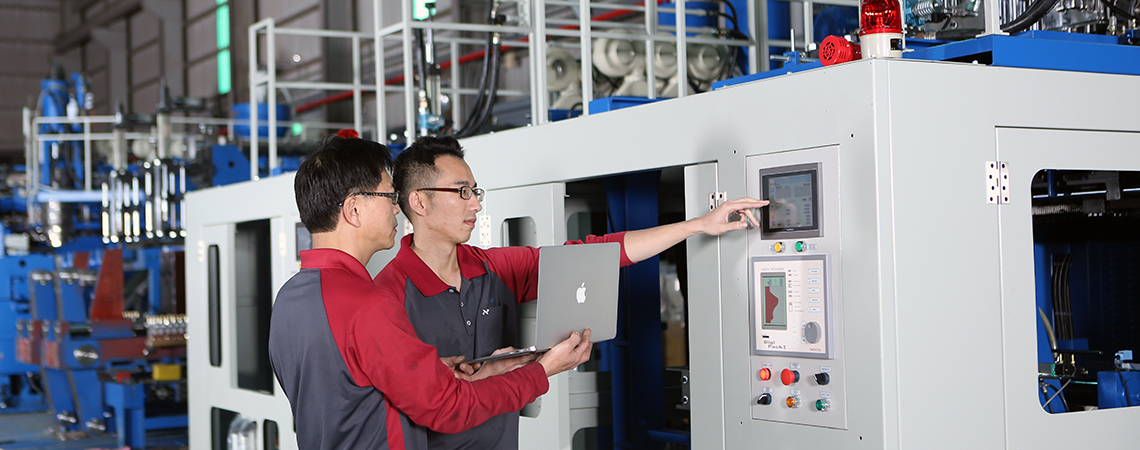
Key Factors Affecting Extrusion Blow Molding Product Quality
Extrusion blow molding technology in blow molding machinery is widely applied to products such as chemical drums, edible oil drums, beverage bottles, and pharmaceutical containers. Its advantages lie in stable output, fast return on equipment investment, and high product strength. However, to achieve long-term and stable production of high-quality blow molded products, strict control must still be maintained over material selection, process parameters, mold design, equipment status, and production environmental conditions. This article will explain the core factors affecting blow molded product quality and provide optimization recommendations.
I. Material Selection
1. Polymer Selection: Different applications have vastly different requirements for material performance. Improper material selection can easily lead to defects such as warping, uneven shrinkage, and parting line brittleness/cracking. Common materials include:
• HDPE: High strength and excellent chemical corrosion resistance, suitable for chemical drums and industrial containers.
• LDPE: Good flexibility, suitable for packaging that requires squeeze deformation.
• PP: Good heat resistance and chemical resistance, commonly used in food containers and automotive parts.
• PETG: High transparency and good impact resistance, suitable for products with high cosmetic appearance requirements.
2. Additives and Color Masterbatches: Stabilizers, antioxidants, and colorants directly affect melt stability, surface quality, and long-term weather resistance. Improper formulation ratios may lead to black spots, flow marks, or degradation of mechanical properties.
3. Material Purity: High-quality products must use raw materials from stable sources with low contamination. Poorly managed recycled materials often cause uneven wall thickness, cosmetic defects, and increased leakage risks.
II. Extrusion Process Parameters: Determining Wall Thickness and Consistency
1. Melt Temperature Control: Temperature fluctuation is one of the main sources of uneven wall thickness. Stable melting temperature equates to uniform material flow and structural strength.
2. Extrusion Speed and Back Pressure: Excessively fast speed will result in a parison that is too thin and prone to sagging, while excessively slow speed will lead to wall thickness that is too thick, wasting material.
3. Thickness Control: This can reinforce the thickness of critical areas, avoid raw material waste, and improve parting line strength.
III. Mold Design: The Key to Shape, Strength, and Appearance
1. Mold Processing Precision: High-precision molds ensure dimensional consistency, stable welding lines, and uniform product appearance.
2. Cooling System Efficiency: Uneven cooling leads to warping, surface sink marks, and unstable bottoms; therefore, good cooling channel design and flow rate control are crucial.
3. Material Flow Inside the Mold: Poor runner design will cause material accumulation and local stress concentration, affecting durability.
IV. Equipment Setup and Maintenance
Combining AI with Industry 4.0 predictive maintenance can significantly boost equipment utilization/availability and serves as the foundation for stable mass production. Regular calibration ensures batch-to-batch product consistency; preventive maintenance avoids sudden downtime and quality fluctuations; intelligent monitoring systems provide real-time monitoring of pressure, temperature, and wall thickness.
V. Environmental Conditions' Impact on Quality
Both temperature and humidity affect product yield rate. In addition, food and medical containers require cleanroom-grade production environments to avoid contamination risks.
VI. Quality Control and Testing Mechanisms
• In-line Inspection: Wall thickness monitoring and real-time cosmetic appearance inspection.
• Post-production Testing: Compression testing, leakage testing, and long-term durability testing.
• Data Analysis: Quality data is a key asset for continuous process improvement and cost reduction.
VI. Common Problem Analysis
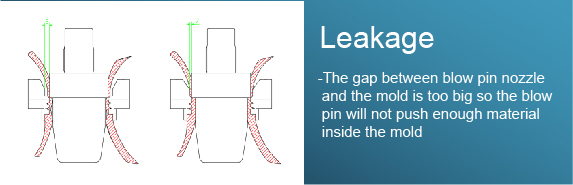
1. Leakage: The gap between the blow pin nozzle and the mold is too large, causing the blow pin to fail to push sufficient material into the mold cavity, which subsequently results in a defective parting line and product leakage.
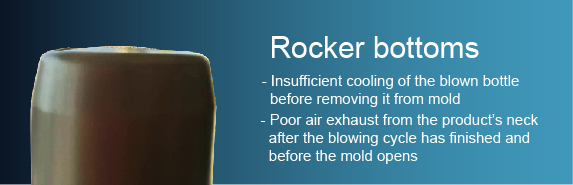
2. Unstable Bottom: Insufficient cooling before mold opening; poor venting at the neck of the product after the blow molding cycle ends and before the mold opens.
3. Parting Line (Welding line) Tearing: The mold closing speed is too fast; the parison thickness in the handle area is too thin, or there is insufficient flash material, making it impossible to form a parting line with adequate strength.

4. Surface Waving or Orange Peel Phenomenon: During the blowing process, the parison wall intermittently contacts the cold mold surface twice instead of completing the blow molding in a single instance, resulting in a waved or orange peel appearance on the surface.

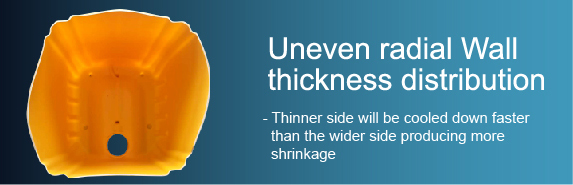
5. Uneven Radial Wall Thickness Distribution: The thinner side cools faster, resulting in a larger amount of shrinkage compared to the thicker side, which subsequently leads to deformation or dimensional instability of the finished product.
6. Black Spots: Foreign matter remaining inside the extruder die head, or aged and degraded resin contaminates the melt, subsequently forming spots of a different color on the surface of the finished product.

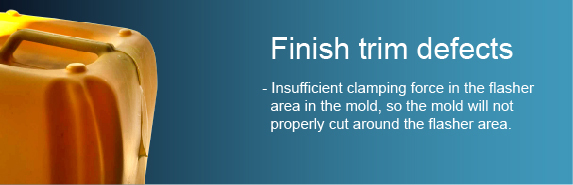
7. Finished Product Trimming Defects: The mold clamping force in the flash area is insufficient, making it impossible to effectively cut off the flash, which results in incomplete or defective trimming.
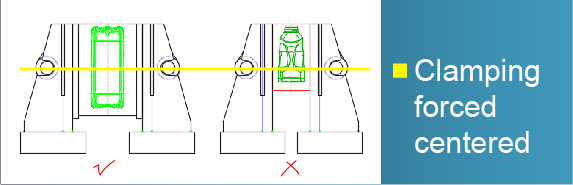
8. Centered Clamping Force: The clamping force must act on the centerline of the mold. If the clamping force is not centered, it can easily cause uneven force on the mold, subsequently leading to defective welding lines, excessive flash, or deformation of the finished product.
Through customized screws, barrels, molds, and thickness control, high-quality products can be stably produced even when using bio-resins (PHA) or materials with a high recycled content. Practical case studies demonstrate that combining thickness control systems, upgraded mold cooling, and real-time monitoring systems can boost output by more than 20% and significantly reduce defect rates. As sustainable materials and smart manufacturing become mainstream, choosing a partner with technology integration and customization capabilities will be the key for enterprises to enhance their competitiveness.
- Tab Gallerys
 中空成型常見問題: 洩漏。
 中空成型常見問題: 底部不穩。
 中空成型常見問題: 夾模線裂開。
 中空成型常見問題: 面起波紋或橘皮現象。
 中空成型常見問題: 徑向壁厚分佈不均。
 中空成型常見問題: 黑點。
 中空成型常見問題: 成品修邊缺陷。
 中空成型常見問題: 夾模力置中。
- Video


Over 35 years of expertise in blow molding equipment make us the preferred choice for long-term partners.
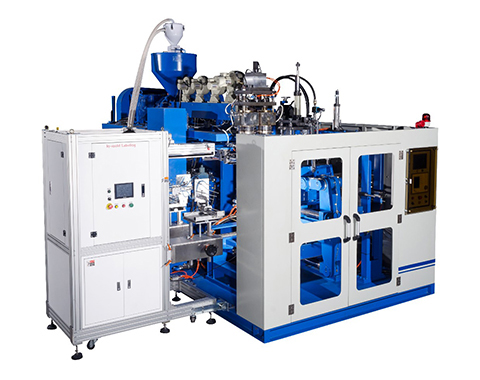
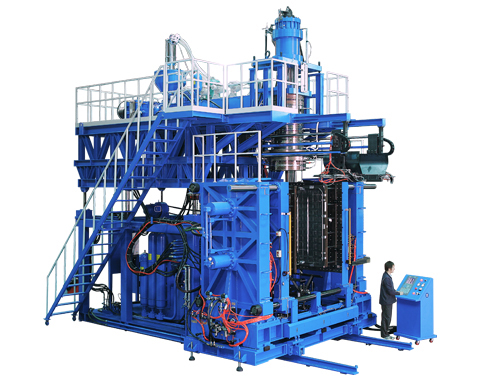
How to Trace Blow Molding Defects to Their Causes
Quality starts with materials: the polymer must suit the product, additives and masterbatch ratios affect melt stability and surface, and poorly managed regrind causes uneven walls and leaks. In the process, melt temperature stability, extrusion speed and parison thickness control determine wall consistency, while mold precision and cooling channel design decide shape and appearance.
Several common defects have mechanical causes. Leakage often comes from too large a gap between the blow pin nozzle and mold, weld line tearing from fast mold closing or a thin parison at the handle, black spots from degraded resin left in the die head, and poor trimming from insufficient clamping force in the flash area. Inspection data help engineers confirm each diagnosis; for parison-related causes, see the continuous machine options, or send photos of the defect with your inquiry for review.