

Multi-layer continuous type of blow molding machine
Multi-layer continuous type of blow molding machine
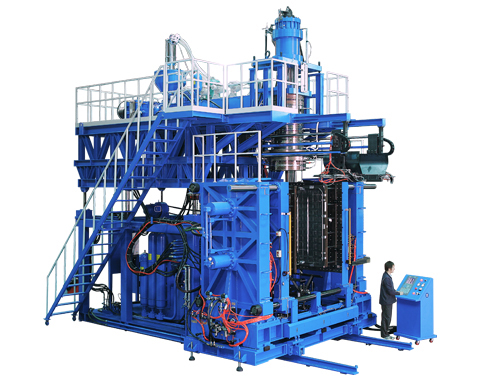
Three-Layer Continuous Type of Blow Molding Machine: The Industry Standard for 5L–30L Containers
Currently, the most common and mature manufacturing method on the market is the use of Three-Layer Continuous blow molding machines, which are widely used to produce 5L to 30L containers.
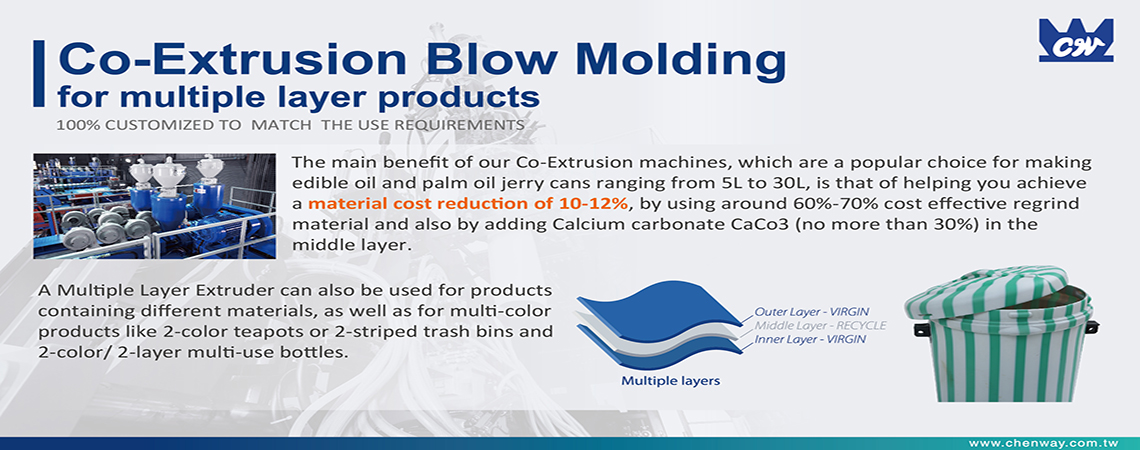
The three-layer structure utilizes three extruders and a co-extrusion die head to form a three-layer parison in a single extrusion process. The material distribution of each layer is as follows:
● Outer Layer (15%–20%): Virgin material with approximately 1%–2% masterbatch, ensuring an attractive appearance and consistent color.
● Inner Layer (15%–20%): Virgin material is used to ensure the internal quality and safety of the final product.
● Middle Layer (60%–70%): Regrind material combined with calcium carbonate (CaCO₃). Up to 30% CaCO₃ can be added based on the total weight of the container, effectively reducing material costs.
Compared with a conventional single-layer extrusion system, this three-layer structure and material formulation can reduce raw material costs by approximately 15%–17%.
Proven in actual production, containers manufactured with this formulation meet market requirements for key performance criteria, including drop resistance and stacking strength. This solution has been successfully and consistently used in the market for more than 15 years, demonstrating its long-term reliability.
Our three-layer continuous extrusion blow molding machine combines high efficiency, versatility, and excellent operational stability. With mature, proven technology, it helps customers reduce material costs and improve production efficiency, making their products more competitive in the market.
Key Advantages of Chen Way’s Continuous Blow Molding Machines
1. Reduced Labor Dependency: Simplified mechanical structure paired with a user-friendly HMI (Human-Machine Interface) minimizes the need for manual intervention.
2. Enhanced Efficiency: An intuitive programming system ensures easy operation and streamline production workflows.
3. Space Optimization: The compact footprint maximizes factory floor space and increases production output per square meter.
4. Stable & High Yield: Advanced continuous production technology ensures a highly stable and efficient process, resulting in superior yield rates for finished products.
Whether your priority is production efficiency, cost control, or product quality, Chen Way’s Three-Layer Continuous type of blow molding machine is the reliable choice that ensures peace of mind and enhances your competitive edge.
Specification
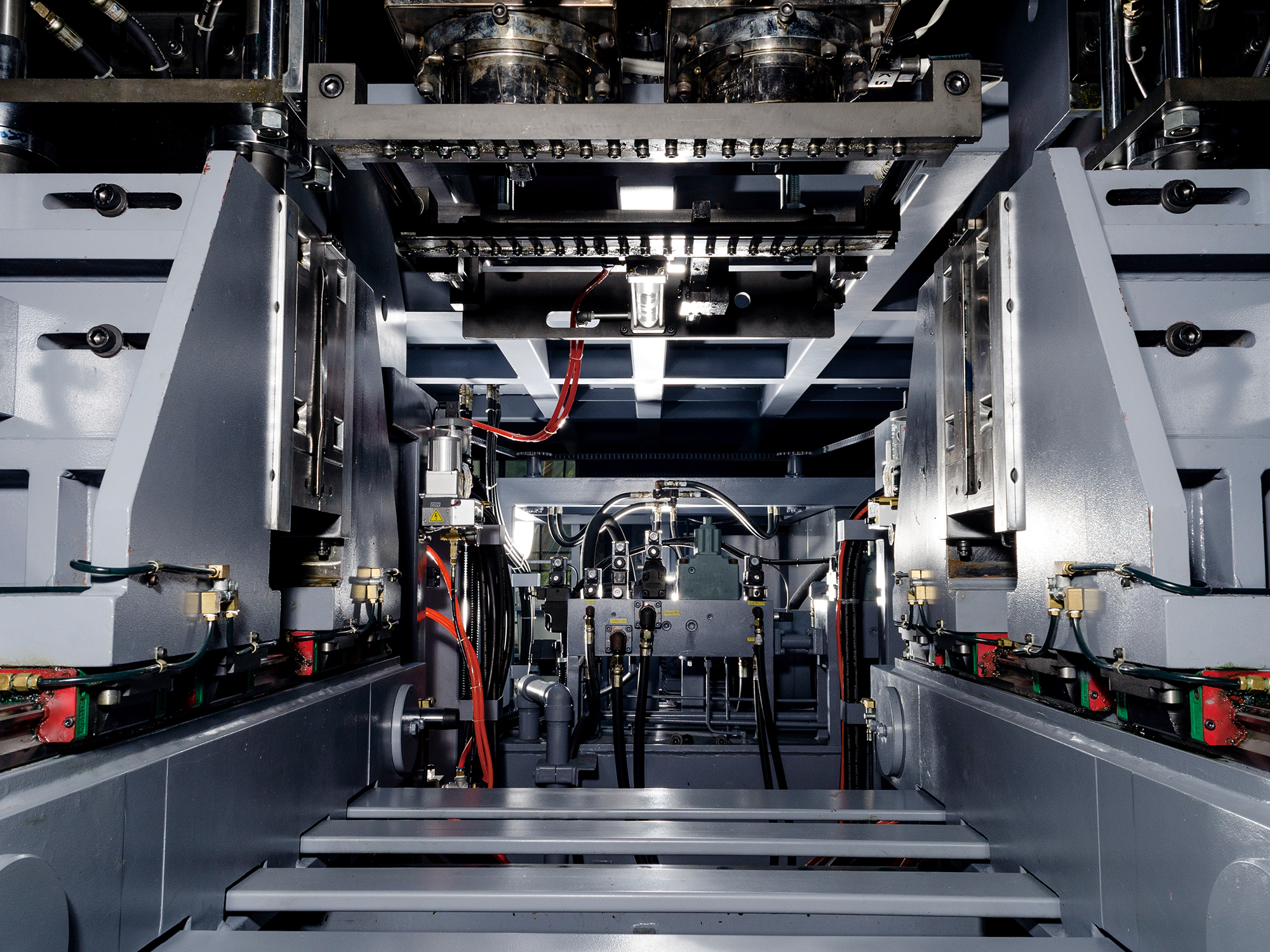
1. Clamping Unit: Single Station / Double Station: The linked lever type clamping plates are engineered with a high-rigidity structure, ensuring clamping force is applied directly to the center of the mold without deviation. A Double Station configuration can increase production capacity by 1.6 to 1.8 times compared to a Single Station.
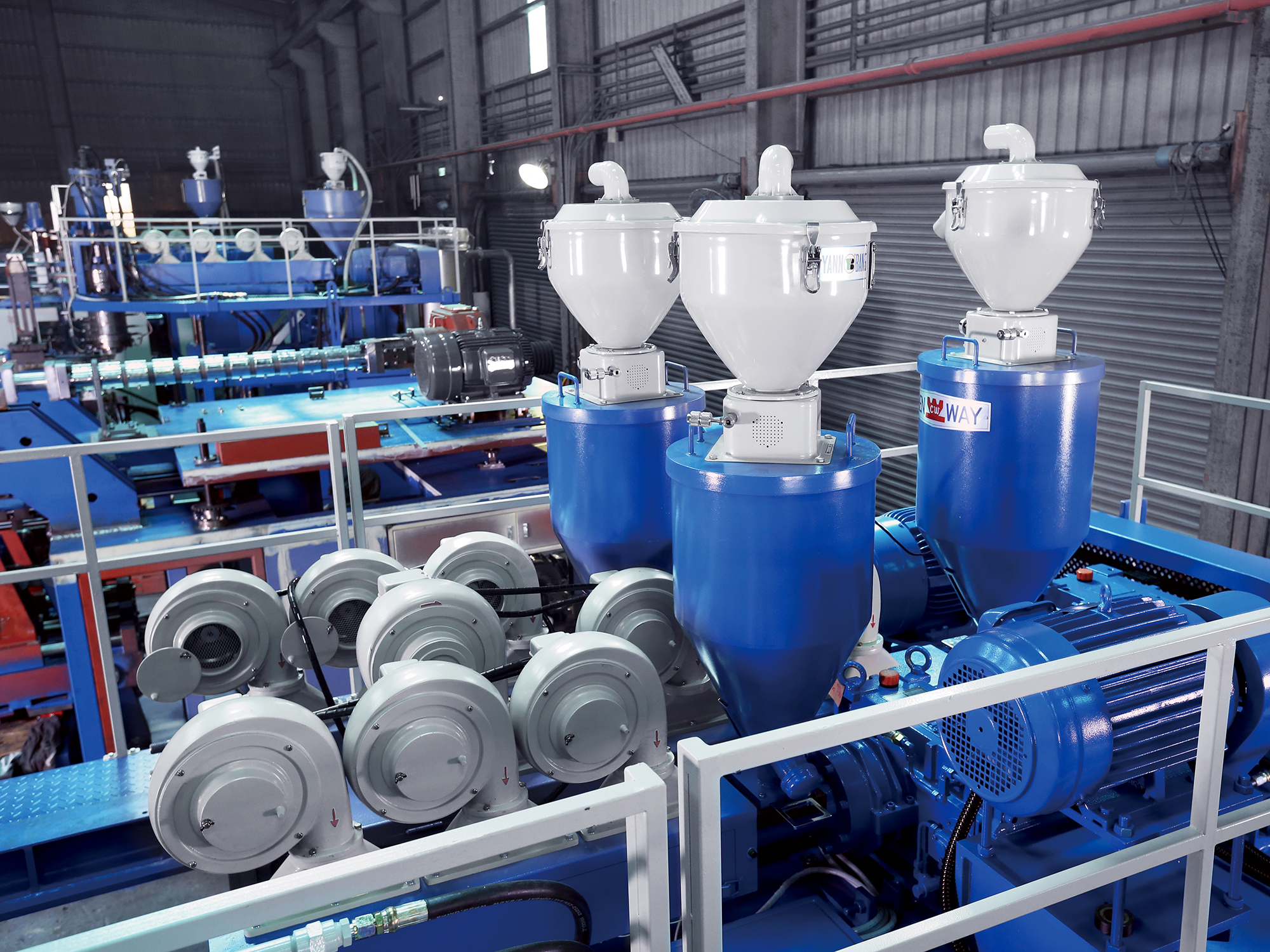
2. Extruder: Single Layer / Multi-Layer: Multi-layer extrusion offers high versatility in material usage, allowing for a higher percentage of recycled material or a reduction in masterbatch (colorant) consumption.
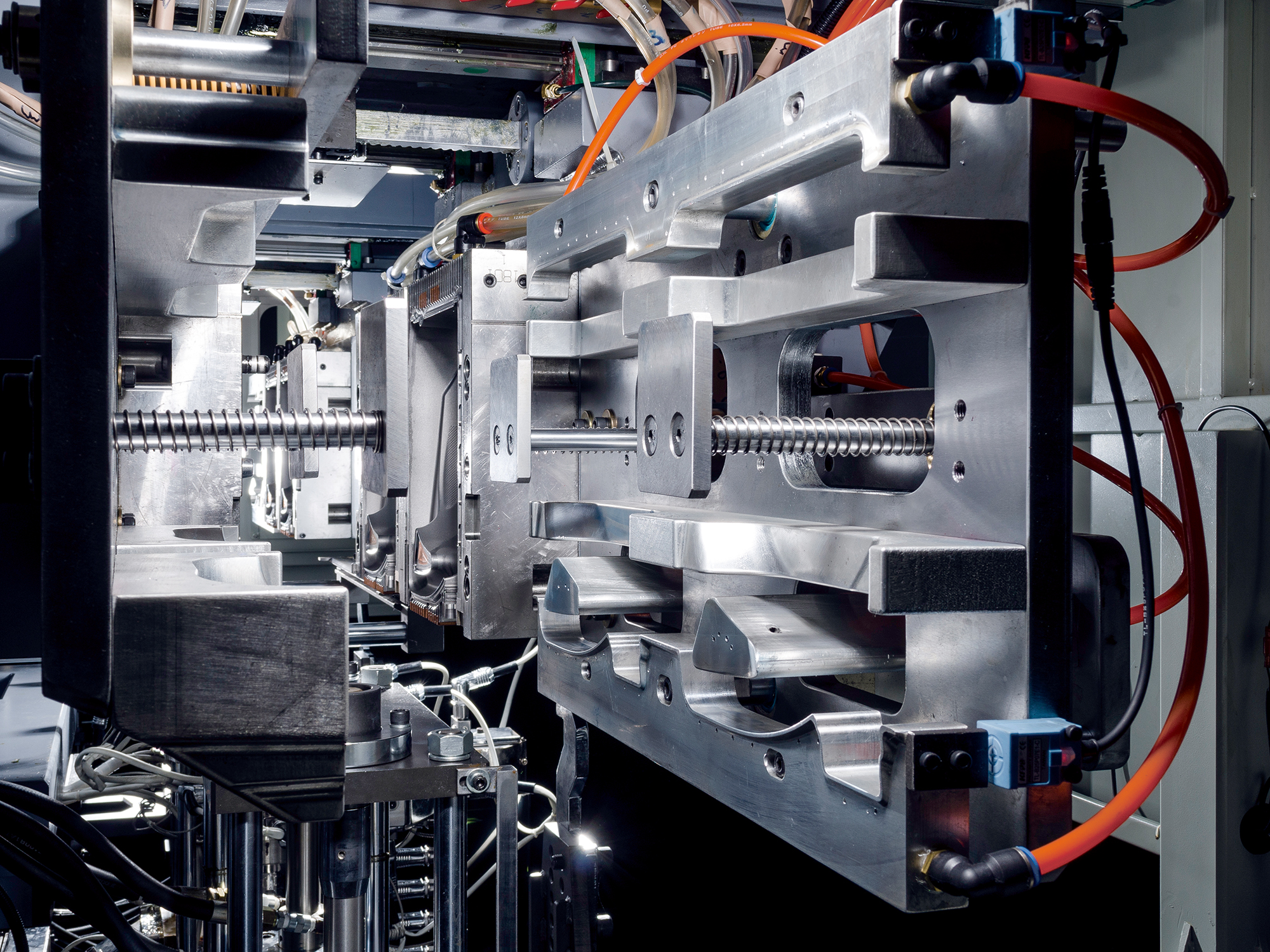
3. Auto-Deflashing: Utilizing hydraulic and pneumatic cylinders, this device automatically removes flash (excess material) from the top, bottom, and handle areas of bottles or drums, significantly reducing labor costs.
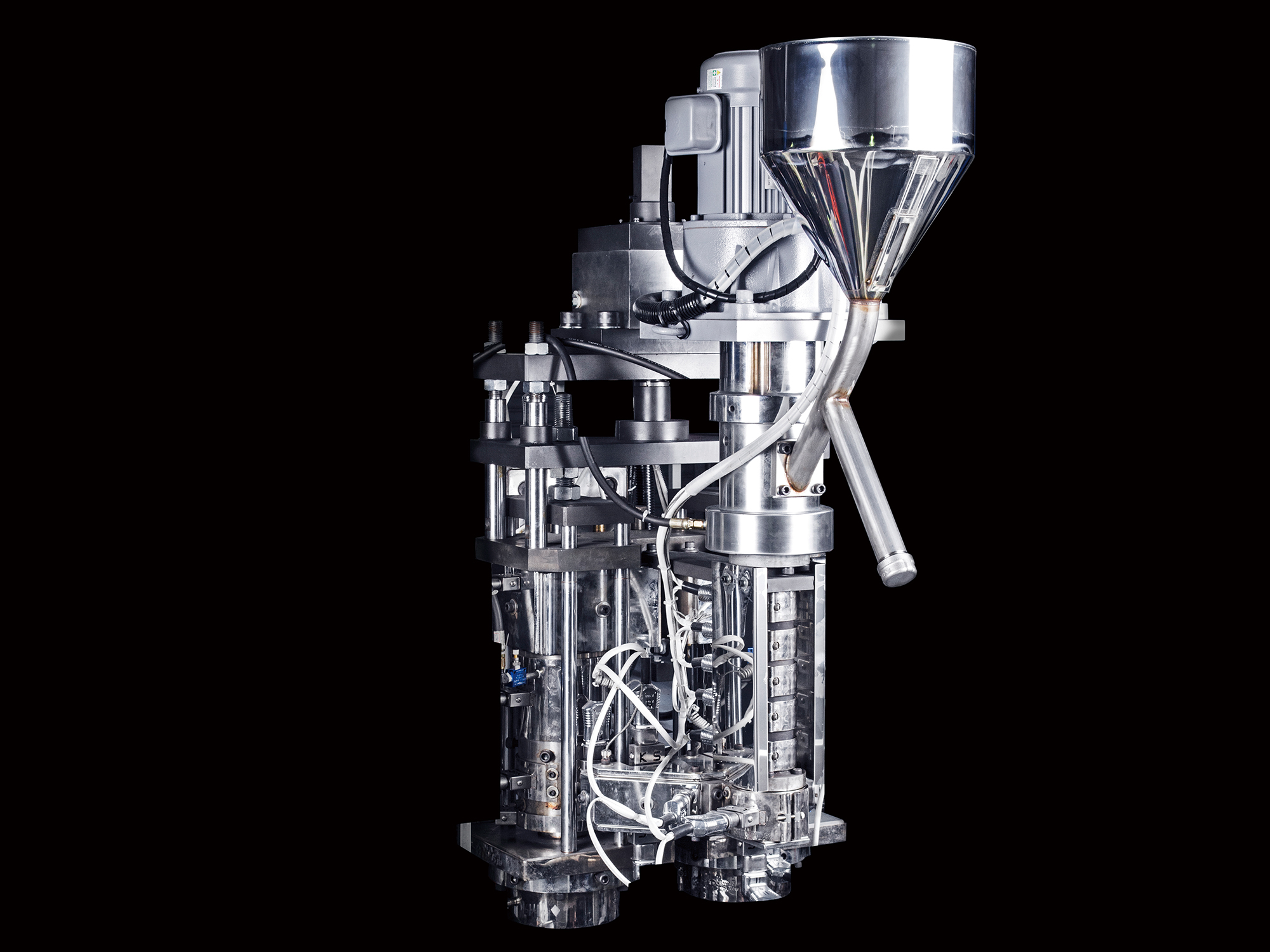
4. View Stripe: The view stripe extruder creates a transparent vertical line on bottles or drums, allowing users to clearly see the remaining liquid capacity.
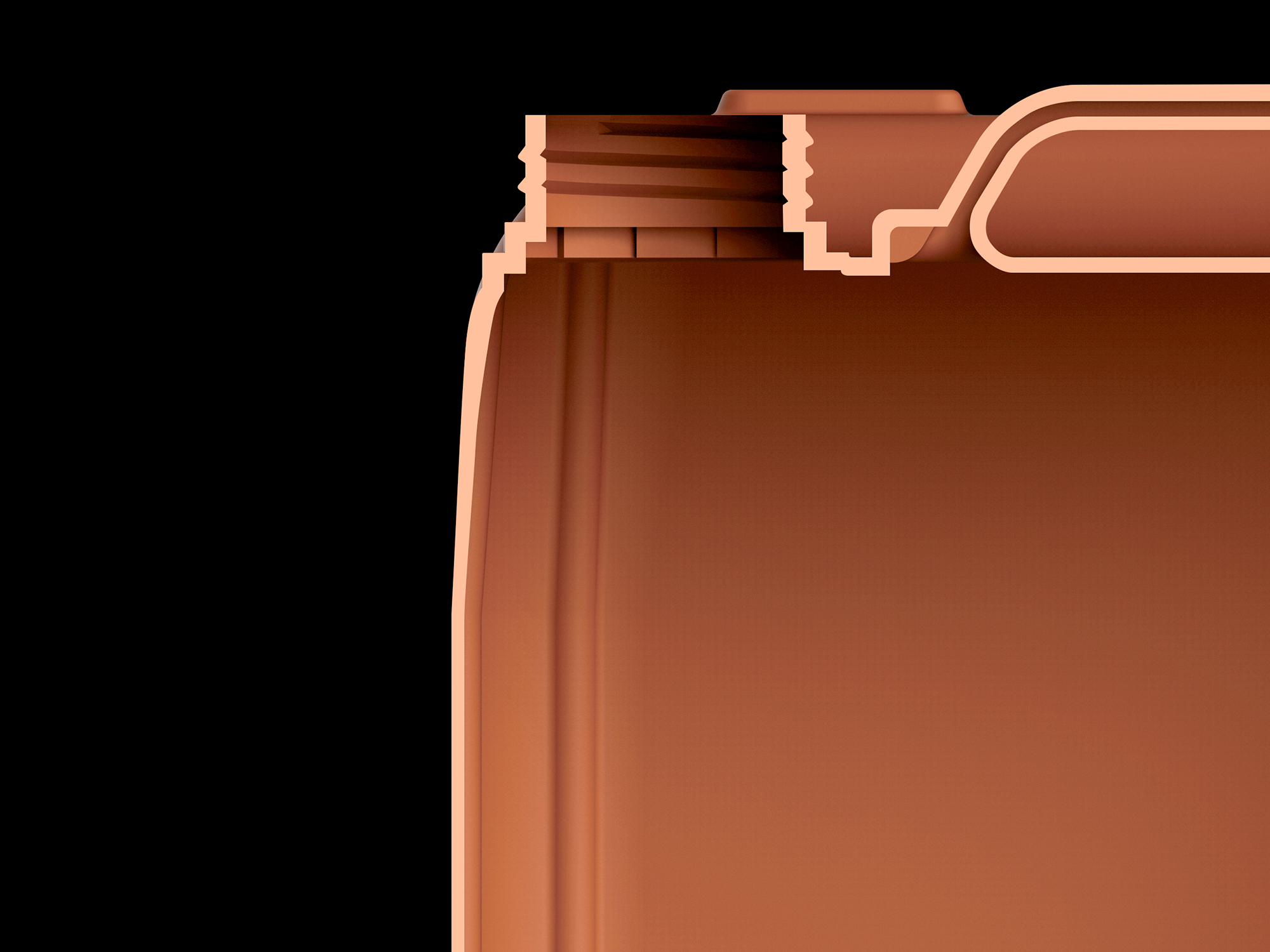
5. Parison Thickness Control: The MOOG 200-point longitudinal parison control system allows for precise adjustment of the parison thickness across 200 points. This optimizes raw material usage and enhances the structural strength of the finished product.
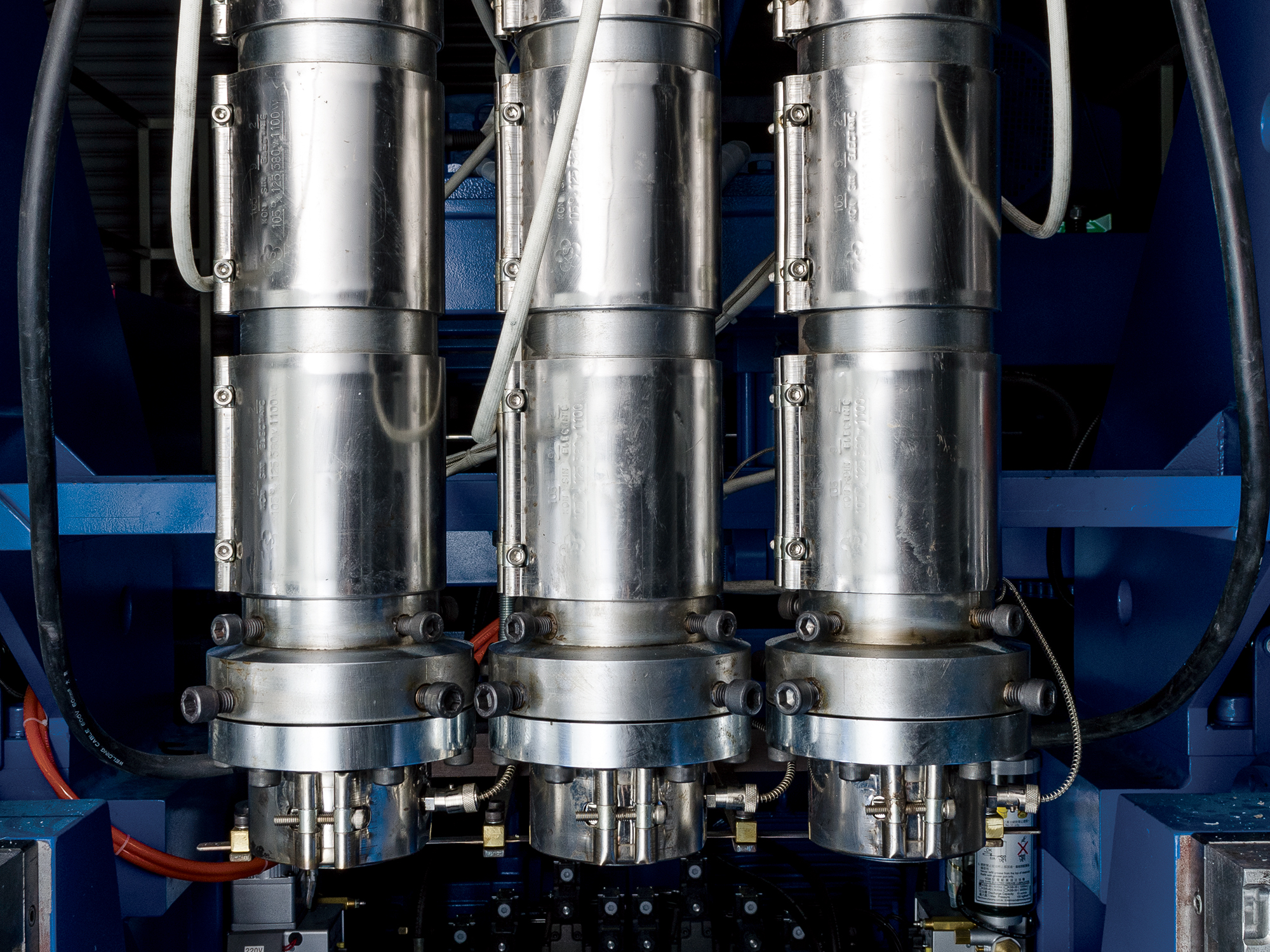
6. Cavity: Single Cavity / Multi-Cavity: Available from single to multi-cavity configurations. Multi-cavity die heads enable the simultaneous production of multiple items, maximizing output.
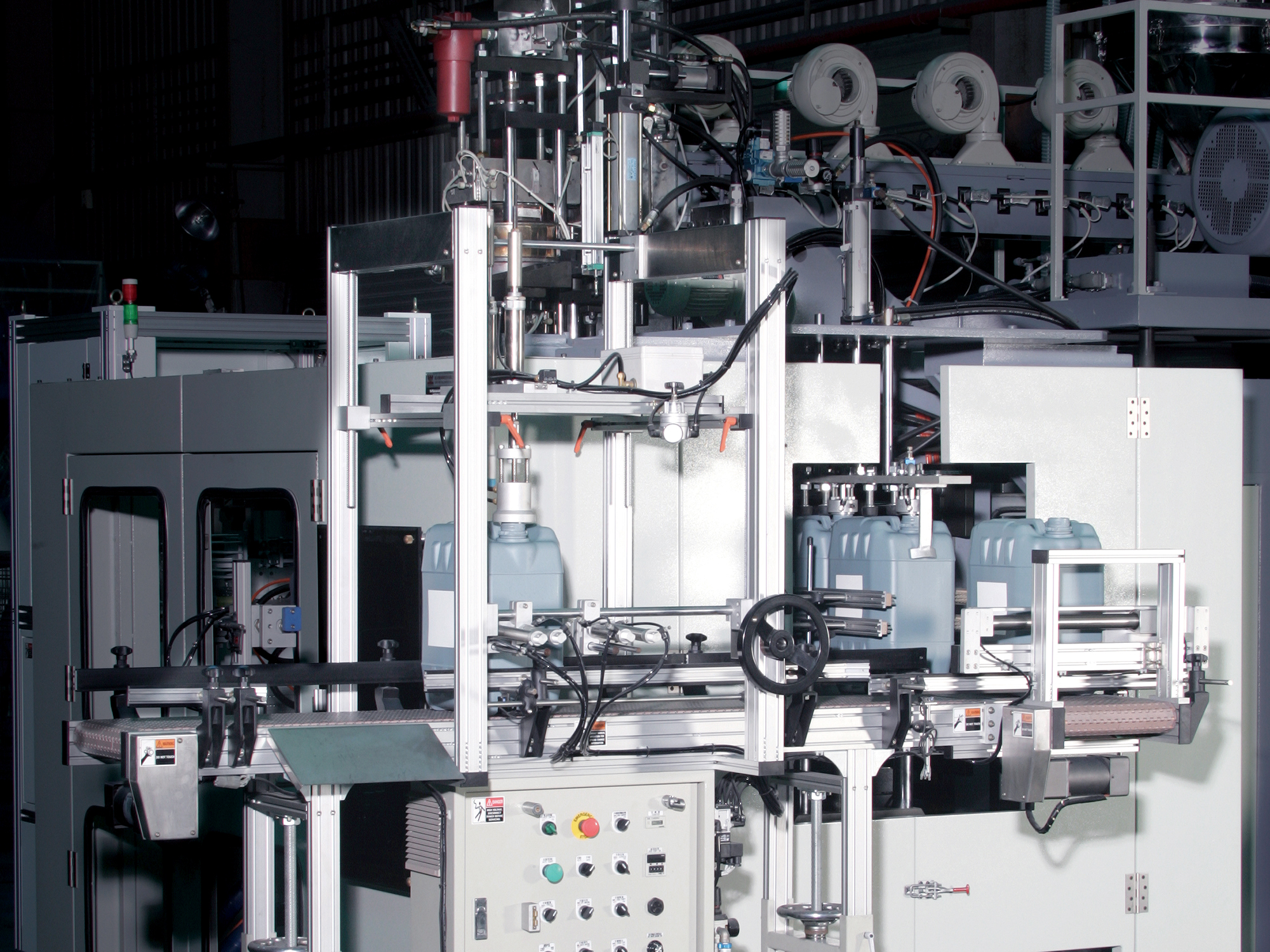
7. Leak Tester: An automated system used to detect any leaks or defects in empty containers to ensure 100% quality assurance.
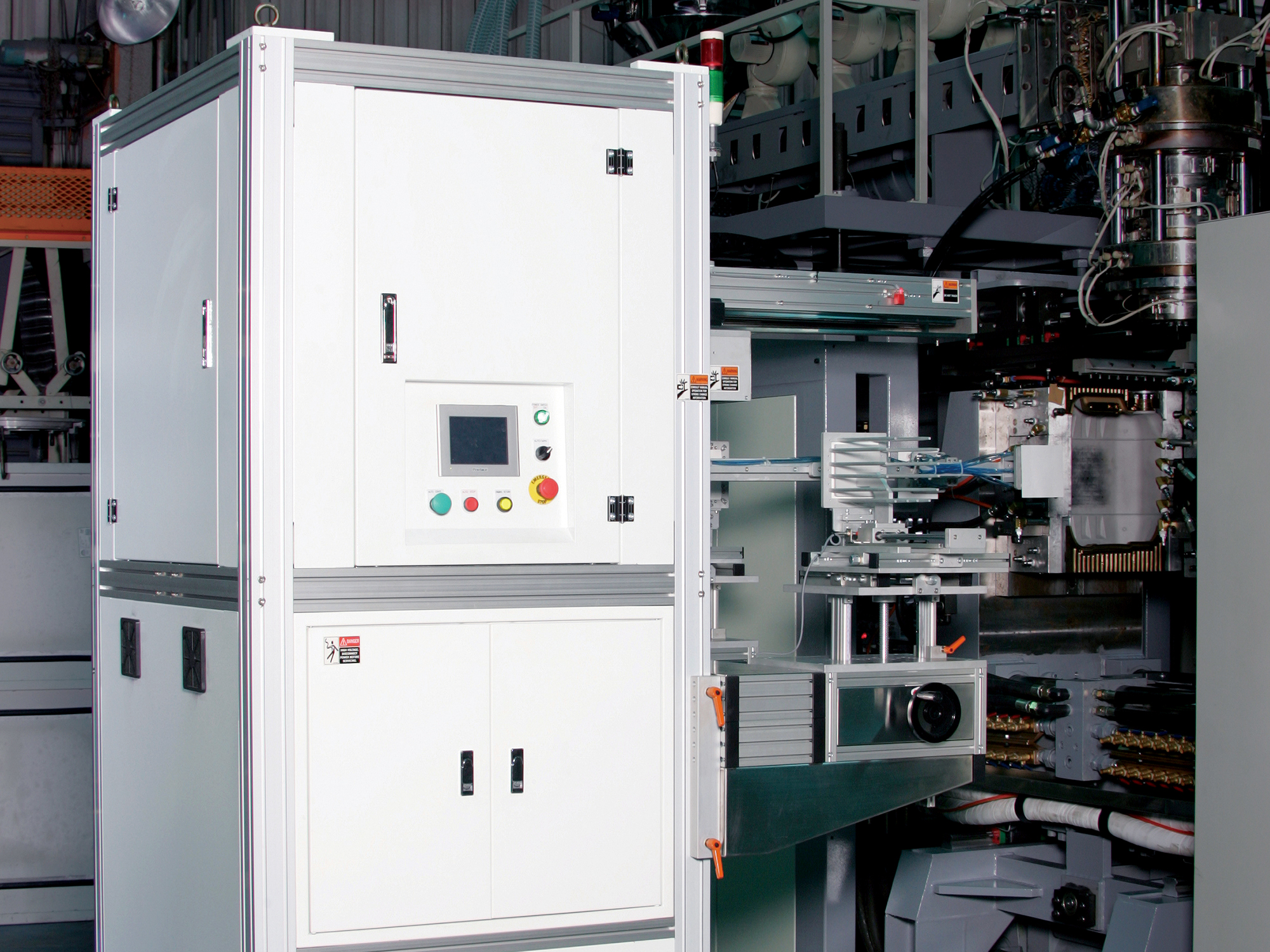
8. In-Mold Labeling (IML): This system provides fast and precise labeling during the molding process, reducing labor and time costs. IML prevents labels from peeling or cracking, significantly enhancing product durability and aesthetic appeal.
| Screw Size | 45 / 65 / 45 M/M | 55 / 75 / 55 M/M | 65 / 100 / 65 M/M |
| Material | PE / PVC / PP | ||
| Output | 15 / 60 / 15 Kg/Hr | 35 / 120 / 35 Kg/Hr | 50 / 180 / 50 Kg/Hr |
| Production Range | 1 Cavity: 10L 2 Cavities: 5L | 1 Cavity: 10 ~ 30L | 1 Cavity x 2 Stations: 10 ~ 30L |
- Video
Multi-layer models combine triple-layer co-extrusion technology with a double-station operating mode and integrate an automatic deflashing system, significantly improving production efficiency and product consistency. It is especially suitable for the manufacturing of plastic containers with strict performance requirements, such as edible oil drums. The inner layer uses virgin material; the outer layer can use virgin material and masterbatch; the middle layer can incorporate up to 70% recycled material and calcium carbonate, effectively reducing raw material costs by approximately 10% to 12%. This configuration not only improves the product's chemical resistance and structural strength but also supports sustainable production.
- Gallery
 Diamond shape Jerry can
 Milk tank
 Jerry can
 20L/25Ljerrycan
 20L/25Ljerrycan


Over 35 years of expertise in blow molding equipment make us the preferred choice for long-term partners.
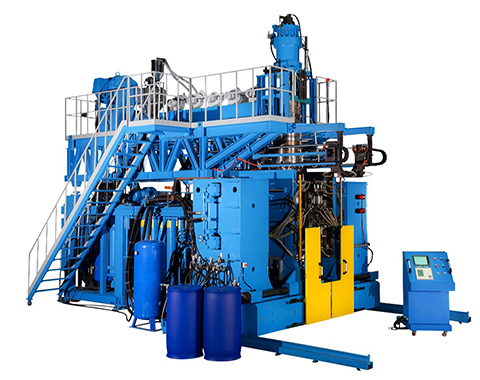
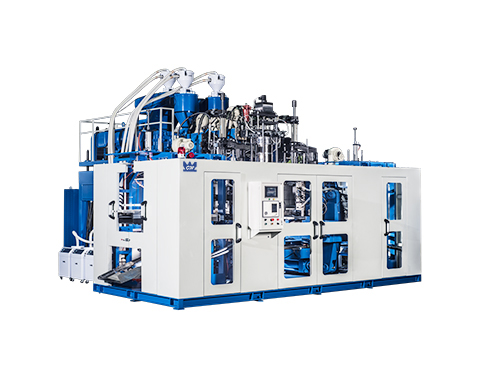
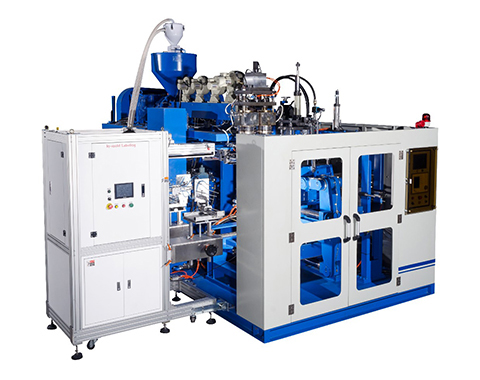
How the Three-Layer Structure Is Built
Three extruders feed a co-extrusion die head that forms a three-layer parison in one extrusion. Virgin resin with masterbatch forms the outer layer for color and appearance, virgin resin forms the inner layer in contact with the contents, and the thicker middle layer combines regrind with calcium carbonate. Chen Way uses this structure mainly for 5 L to 30 L jerry cans such as edible oil and chemical containers; layer shares and configurations are listed in the specification section.
The material saving depends on the calcium carbonate ratio, resin prices and the container's drop and stacking requirements, so it should be calculated for each container rather than taken as a fixed figure. Automatic deflashing and a view stripe extruder are optional, and a double station version is offered. The article on calcium carbonate middle layers explains the formulation idea; ask for a formulation and machine review for your container.