

Continuous Type of Blow Molding Machine
Continuous Type of Blow Molding Machine
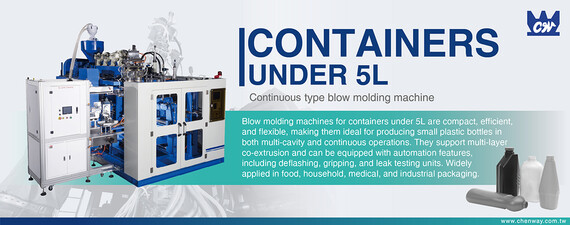
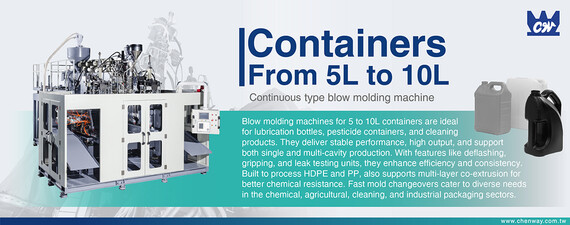
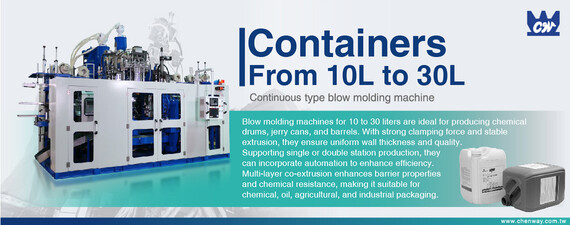
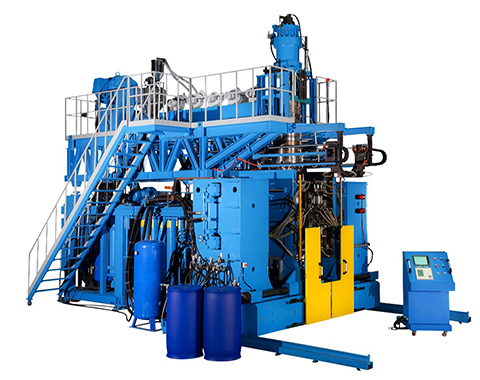
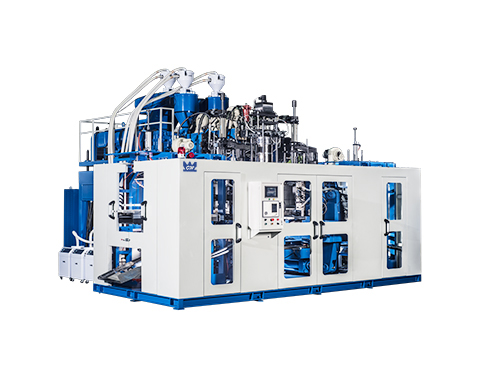
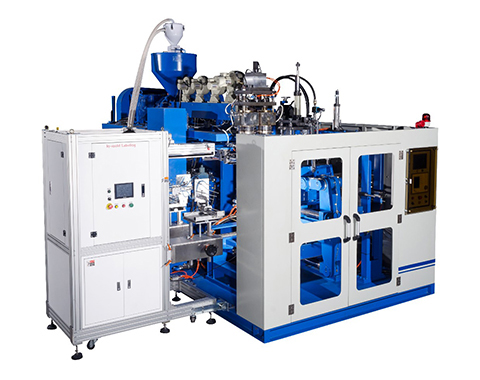
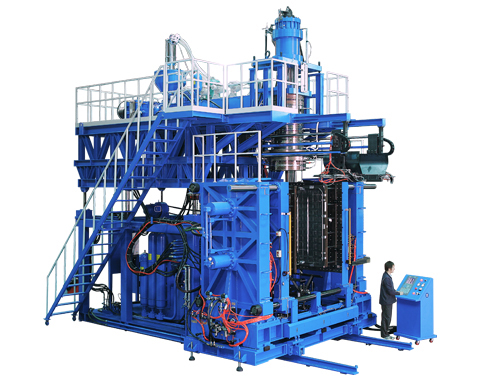
Continuous Blow Molding Machines are high-efficiency plastic processing systems designed to deliver exceptional product consistency. They are widely used across various industries to manufacture hollow plastic products, particularly containers with simple geometries, volumes under 30 liters, and net weights below 1.6 kg. Common applications include beverage bottles, detergent containers, pharmaceutical bottles, and lubrication oil canisters.
These machines are versatile enough to handle both small-scale customized batches and large-scale mass production. They also support the production of multi-layer, multi-cavity, and multi-color products. Specifically, the multi-cavity design enables the simultaneous production of multiple items, significantly boosting overall output.
Core Principles of Operation
The molding process involves the continuous extrusion of molten plastic into a tubular shape (known as a parison). The mold then closes around the parison, and air is injected to blow it into the shape of the hollow product. This technology is compatible with a wide range of thermoplastics, including HDPE, PP, and PVC.
Sustainability & Automation
In addition to its high performance, continuous blow molding is characterized by its energy efficiency and high material utilization. Any flash (waste material) generated during the process can be reintroduced into the production cycle via a recycling system, aligning with modern industry standards for sustainable development and green manufacturing.
To further enhance operational efficiency, these machines can be integrated with auxiliary equipment for functions such as automatic deflashing (trimming), leak testing, and in-line recycling. This reduces manual intervention and achieves a high degree of production automation.
Over 35 years of expertise in blow molding equipment make us the preferred choice for long-term partners.
Sizing a Continuous Extrusion Blow Molding Machine
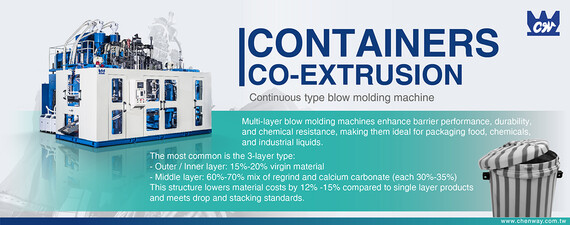
In continuous extrusion the parison is formed without interruption while the molds alternate under the die head, which suits bottles, cans and jerry cans. Chen Way's small series covers containers up to 5 L, the medium series covers 5 L containers and 10-30 L jerry cans, and three-layer co-extrusion models place regrind and calcium carbonate in a hidden middle layer. Screw sizes and extrusion output for each series are listed on the individual machine pages.
Capacity can be raised with a double station or multi-cavity die heads instead of a larger extruder, so container weight and cycle time matter as much as extruder size. View stripe extruders, MOOG parison control, automatic deflashing, leak testing and in-mold labeling are optional equipment chosen per project. For small bottles, start with the under 5 L continuous machine; send container volume, weight and output target for sizing.