

Auxiliary equipment
Auxiliary equipment for accumulator type of blow molding Machine
Blow molding machines play a vital role in the plastics processing industry. To ensure stable molding quality and improved production efficiency, various specialized auxiliary equipment must be utilized. Covering areas from raw material handling and cooling systems to conveying devices and automated controls, these auxiliary systems directly impact the smoothness of the overall production flow and final product quality.
In addition to basic equipment such as chillers, air compressors, and conveyor belts, various specialized auxiliary systems are required to meet the diverse product characteristics and quality requirements. This is especially critical for large containers and products with strict quality requirements. Here, we introduce three key types of equipment: rotary cutters for open-top drums, post-cooling equipment, and leak testers.
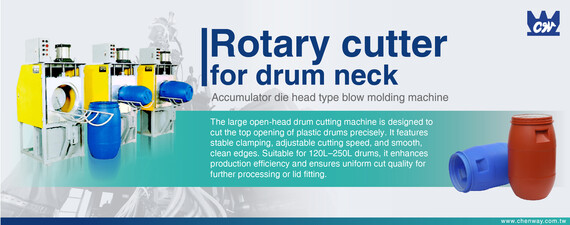
1. Rotary Cutter for Open-top Drums
Open-top drums (such as chemical drums and water storage tanks) require the removal of flash from the neck and bottom after molding. While the bottom flash is removed manually, a rotary cutter is necessary to ensure the neck reaches the specified dimensions with a smooth, flat cut. Utilizing high-speed rotating blades paired with automatic positioning devices, this equipment precisely trims excess waste from the drum mouth.
The dimensions are adjustable to the product's neck size, offering advantages such as high precision, high efficiency, and strong consistency. For drums that require matching lids, the flatness of the cut is crucial.
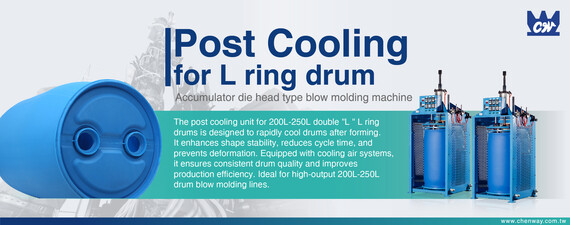
2. Post-Cooling (Secondary Cooling Equipment)
During blow molding, although products undergo initial cooling within the mold, the temperature difference between the surface and the interior of large or thick-walled products can still cause deformation or uneven shrinkage. The Post-Cooling System is a vital extension of the cooling process. Typically used after the product is removed from the mold, it provides uniform cooling to the finished part. This method not only reduces molding cycle times and increases production efficiency but also strengthens product quality, reducing the likelihood of subsequent deformation or degradation.
This equipment features custom fixtures that secure the product and use cold air to cool it, effectively lowering the surface temperature and allowing internal heat to be released more evenly. This minimizes the risk of warping, shrinkage, and deformation, making it particularly suitable for containers over 20L and automotive plastic parts with high aesthetic and dimensional requirements.
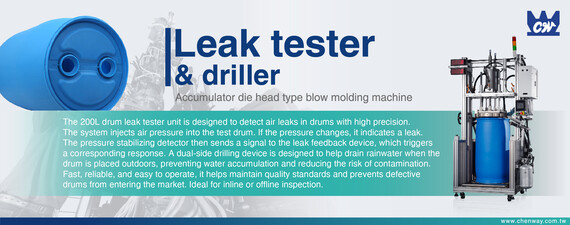
3. Leak Tester and Driller
For hollow containers, airtightness is a fundamental and critical quality indicator—especially for plastic drums and bottles used for liquids, oils, or chemicals. The leak tester is an automated device designed specifically for this rigorous inspection.
The leak tester primarily determines whether a product has holes or thin walls by injecting air and monitoring pressure changes. It effectively eliminates defective items, ensuring every product meets sealing standards. For continuous multi-cavity or high-volume production lines, leak testers are usually connected to conveyor lines to automatically complete sampling, testing, and sorting. If a non-conforming product is detected, it is immediately rejected to a scrap area without manual intervention. For accumulator-type leak testers and drillers, robotic arms can also be employed to achieve full automation.
Conclusion
In summary, rotary cutters, post-cooling equipment, and leak testers address the three critical stages of post-processing: finishing, dimensional stability, and airtightness testing. Implementing these auxiliary systems not only enhances the quality and consistency of molded products but also helps build automated, high-efficiency modern blow molding production lines, exerting a profound impact on industrial upgrading and product competitiveness.
Leak Tester and Driller for the Double-L Ring Drum Accumulator Type of Blow Molding Machine
The system can be integrated with leak-testing equipment and drilling units to meet the requirements for quality inspection and post-processing (specifically for anti-rainwater-accumulation designs) of double-L-ring...
Details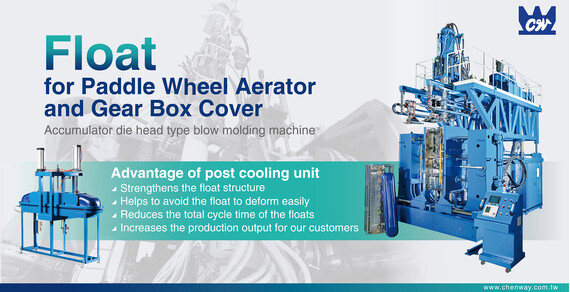
Post-Cooling for Aerator Wheel Paddle Float Accumulator Type of Blow Molding Machine
After the aerator wheel paddle float is molded, it can be paired with a standalone secondary cooling system. This system features built-in water-cooling channels that effectively shorten the molding cycle...
DetailsOver 35 years of expertise in blow molding equipment make us the preferred choice for long-term partners.
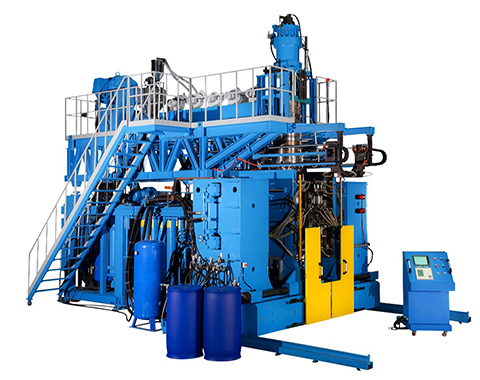
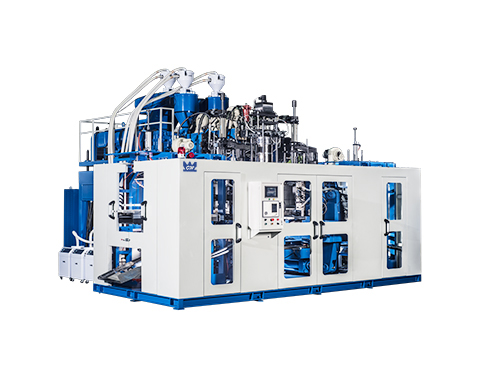
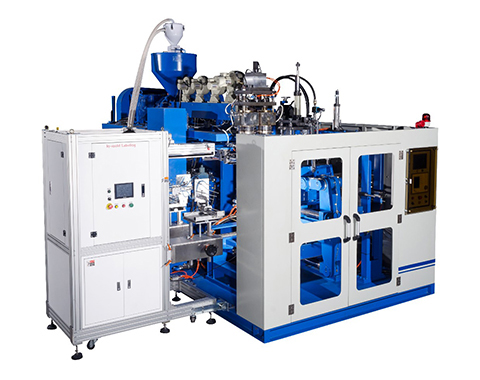
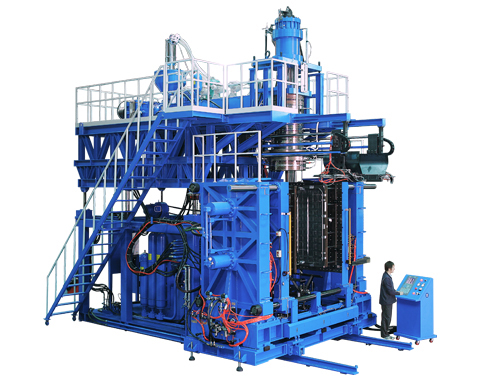
Auxiliary Equipment for Drum and Float Lines
Large blow molded parts usually need work after demolding. Chen Way's auxiliary equipment covers three steps: trimming the neck of open top drums with a rotary cutter so the opening is flat for a lid, post-cooling heavy parts such as double L-ring drums and aerator wheel paddle floats so they hold their shape, and leak testing plus drilling of double L-ring drums.
Each unit is matched to the accumulator machine and product it serves: the rotary cutter is set to the drum neck dimensions, post-cooling fixtures follow the part shape, and the leak tester checks airtightness by pressurizing the container and monitoring pressure change. Selection therefore starts from the drum or float specification; the open top drum machine and aerator float machine pages show where each unit fits. Describe your line layout in the inquiry to receive an integration proposal.