
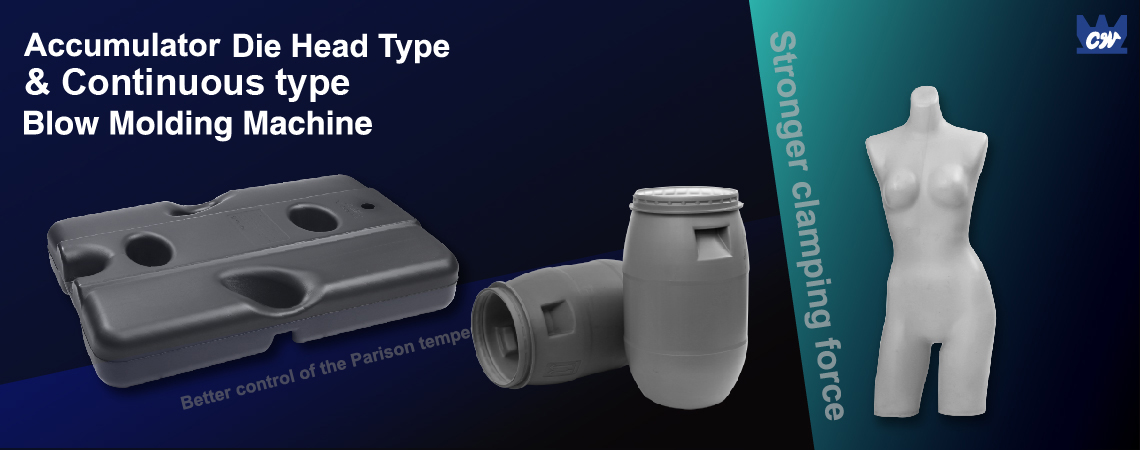
HDPE Blow Molding: A Selection Guide for Continuous vs. Accumulator Die Head Systems
Extrusion Blow Molding (EBM) is one of the most widely used technologies in plastics processing, covering an extensive production range—from 100 mL containers to drums exceeding 1,000L. The process works by extruding molten thermoplastic material into a parison, which is then inflated inside a mold and cooled to form the final product.
Typical applications include household cleaning bottles, cosmetic and edible oil containers, automotive components, industrial tanks, and chemical drums.
How to Choose the Right Extrusion System
The selection of an extrusion system depends primarily on product size, weight, and required shot size.
Shot size refers to the total material required for one molding cycle, including both the finished product weight and the necessary flash.
Continuous Extrusion System
Operating Principle:
The parison is continuously extruded throughout the production cycle.
Best Suited For:
Small to medium-sized products.
Technical Limitation:
For larger products, a much longer parison is required. This can lead to temperature variations between the top and bottom of the parison, resulting in inconsistent molding quality and difficulties controlling wall thickness.
Accumulator Head System
Operating Principle:
Molten material is first stored inside the accumulator head chamber and then discharged vertically at high pressure and high speed once the mold is ready.
Key Advantages of the Accumulator Head System
Precise Temperature Control
The parison is enclosed and transferred directly into blow molding immediately after extrusion, minimizing exposure to ambient air and maintaining a more consistent temperature distribution.
Superior Structural Strength
The internal flow channel design enables extrusion with minimal or no weld lines, significantly improving structural integrity.
High Clamping Performance
The machine structure distributes pressure evenly across the platens, helping prevent air leakage during the blow molding process.
Typical Applications
Automotive Components
Air ducts and HVAC system parts.
Large Household Products
Tables, chairs, baby potties, and large water tanks.
Industrial Packaging
Open-top drums, double L-ring drums, and chemical containers.
Sports Equipment
Basketball stands bases and floating buoys.
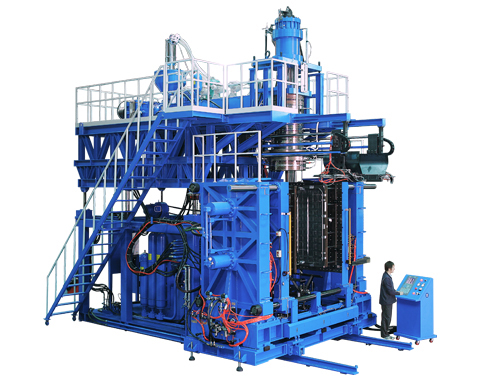
Technological Advancement: High-Performance Double L-Ring Drum Blow Molding Machine
To meet growing global demands for both productivity and product quality, we continue advancing our machine development.
Using our latest-generation 200L–250L Double L-Ring Drum Blow Molding Machine as an example, production efficiency has been significantly improved through faster shot delivery and mold-clamping speeds, reducing cycle time by 5–6 seconds per cycle.
Enhanced cooling performance is also available with an optional Secondary Cooling System, helping products consistently meet stringent drop test requirements.
Global Presence and Proven Experience
CHEN WAY MACHINERY’s accumulator die head blow molding machines have been serving industrial markets worldwide for many years, with installations across Taiwan, Japan, India, UAE, Egypt, Indonesia, Vietnam, and the Philippines.
From precision automotive air ducts to large industrial drums and tanks, we deliver stable, efficient, and reliable production solutions worldwide.
- Video
Over 35 years of expertise in blow molding equipment make us the preferred choice for long-term partners.
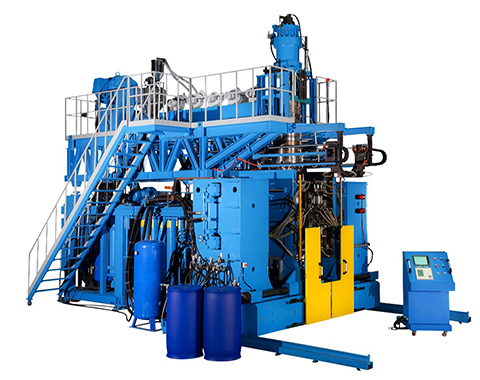
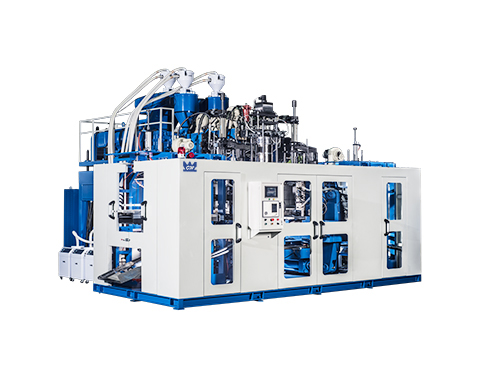
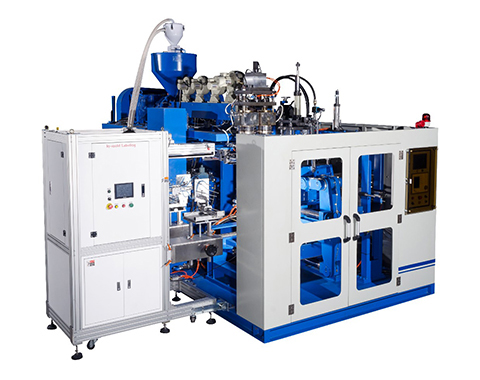
Shot Size Decides Continuous or Accumulator Extrusion
Shot size is the total material for one molding cycle, meaning the finished product weight plus the flash that will be trimmed. Continuous extrusion forms the parison throughout the cycle and suits small and medium products; for large products the parison becomes long, the top and bottom cool unevenly, and wall thickness is hard to control.
An accumulator head stores the melt and discharges it vertically at high speed once the mold is ready, so the parison spends less time exposed to air; the guide credits it with a flow channel designed for minimal or no weld lines and even clamping pressure. Typical results are air ducts, large water tanks, and open top and double L-ring drums. Compare the accumulator head machines, and send your product weight and size with your inquiry for a process recommendation.